 Admin
Admin
Chandratal Lake, or “Moon Lake” as it is affectionately called, is certainly one of the most stunning places on earth that is still not very well known. The lake lies in Spiti Valley at an altitude of 4,300 meters and is enclosed by beautiful Himalayas; it also dazzles like a brilliant blue diamond.
The lake area is a very much liked place for people who hike, camp, and generally love nature, as the latter get to be in pristine nature and enjoy quietness.
This all-in-one guide for the year 2025 includes everything necessary, from how to get to Chandratal, the best places for camping, trekking tips, local food, photography places, and safety measures for high altitude, all discussed.
No matter if you daydream of a short holiday or a wild multi-day hiking adventure, this guide will provide you with a trip that is safe, memorable, and Insta-worthy.
Chandratal Lake: Moon-Lake of the Himalayas
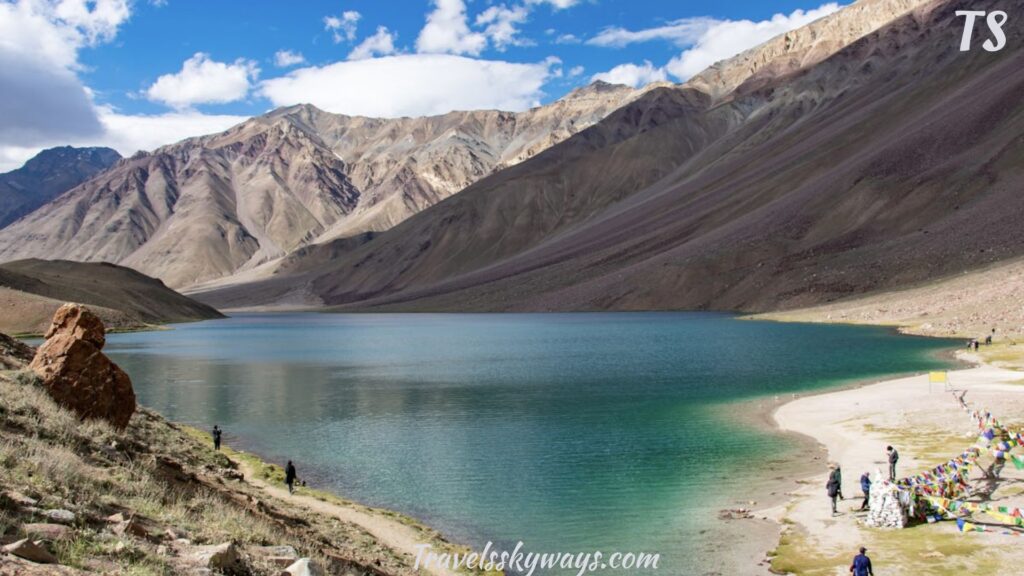
Overview of Chandratal Lake
Imagine stepping into a valley where silence hums like a prayer and a crescent-shaped lake glows under the high Himalayan sun.
That’s Chandratal Lake, the legendary “Moon Lake” perched at about 4,300 meters (14,100 feet) in the Lahaul-Spiti region of Himachal Pradesh. High winds sweep across the stark landscape, yet the water stays calm—mirroring peaks that look close enough to touch.
Here’s a quick snapshot:
| Feature | Detail |
| Shape | Crescent-moon |
| Area | ~0.488 km² |
| Dimensions | ~1.76 km long × ~0.41 km wide |
| Maximum Depth | ~42 meters (≈139 feet) |
| Best Visiting Months | June–September |
During summer, sunlight paints the lake in shifting shades of emerald, turquoise, and deep sapphire. The journey usually includes a short hike from the last drivable point—roughly 2 kilometers along rugged high-altitude terrain.
When travelers finally reach the shoreline, many describe the moment as stepping into a natural amphitheater carved by time.
One hiker once said, “The lake doesn’t reflect the mountains; it amplifies them.”
Mythology and Legends Associated With Chandratal Lake
Stories echo as strongly as the winds around Chandratal Lake, and each tale adds a hint of enchantment to the already dramatic landscape.
- One legend ties the lake to the Mahabharata, where Yudhishthira is believed to have ascended to heaven from this sacred spot—guided by Lord Indra.
- Another story describes a forbidden romance between the Moon God’s daughter and the Sun God’s son. Unable to unite in life, they became two celestial lakes—Chandratal and Suraj Tal—forever facing the sky together.
- Locals often speak of the lake’s “moods,” saying its colors shift with the hours. As travelers often remark, “Chandratal doesn’t reflect the sky; it borrows its soul.”
These legends wrap the lake in a mystical aura. When twilight settles, and the winds grow still, the landscape feels ancient—almost as if the mountains themselves remember the stories.
Geographic Details of Chandratal Lake
Exact Location of Chandratal Lake
Tucked deep within the high-altitude deserts of Himachal Pradesh, Chandratal Lake sits at roughly 4,300 meters (14,100 feet) in the Lahaul–Spiti district. You’ll find it on the Samudra Tapu plateau, a remote, windswept stretch framed by the towering Chandra Bhaga mountain range.
The lake lies about 6–7 hours from Manali via the rugged Batal route and approximately 125 km from Kaza, making it one of the most isolated yet rewarding destinations in the Himalayas.
Here’s a quick reference table that breaks down its geographic identity:
| Parameter | Detail |
| Region | Lahaul–Spiti, Himachal Pradesh |
| Altitude | ~4,300 m / 14,100 ft |
| Coordinates | 32°29′ N (approx.) / 77°36′ E (approx.) |
| Closest Village | Batal |
| Accessibility Window | June to September |
Travelers often describe reaching the lake as a moment of triumph.
One visitor summed it up perfectly: “Every turn on the road feels like the mountains are testing your resolve—but Chandratal makes the struggle worth it.”
Terrain and Surrounding Landscape
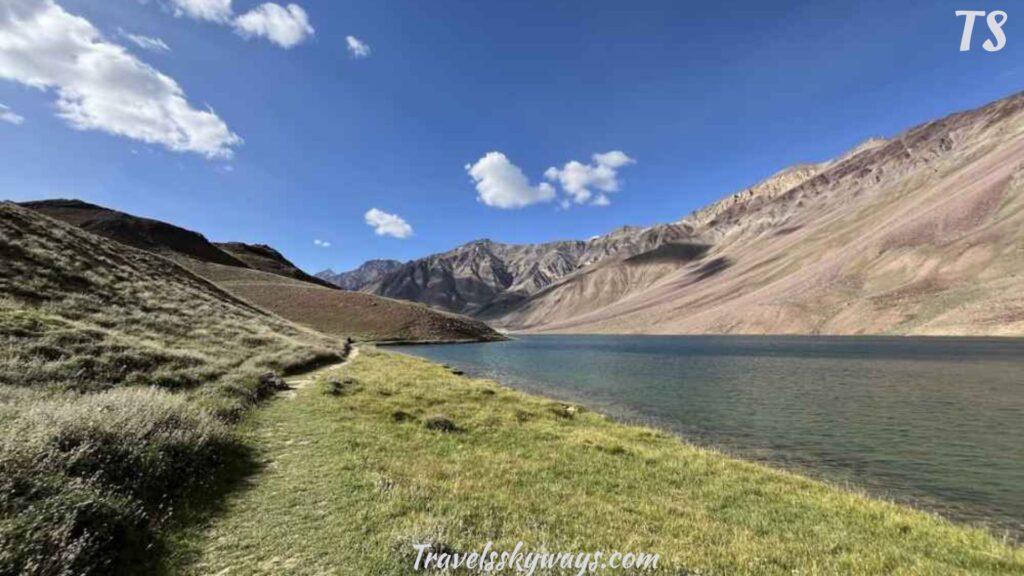
The terrain around Chandratal Lake feels almost otherworldly. The landscape blends arid mountain slopes, rolling moraines, and glacier-carved valleys that stretch beyond the horizon.
Jagged peaks guard the lake like ancient sentinels, while the ground underfoot varies from powdery sand to scattered river pebbles shaped by centuries of Himalayan winds.
A few highlights of the surrounding landscape include:
- Crescent-shaped shoreline that glows when sunlight hits the mineral-rich soil.
- High-altitude meadows (called “samudra grasslands” by locals) bloom briefly during July and August.
- Glacial streams trickling down from nearby peaks feed the lake with icy-clear water.
- Bare, rugged mountains streaked with shades of ochre, rust, and charcoal—a palette sculpted by erosion and time.
During early mornings, the lake turns still as glass. By afternoon, brisk winds sweep across the plateau, sending ripples racing across the water. The contrast creates a burst of natural drama—one moment serene, the next electric.
How to Reach Chandratal Lake
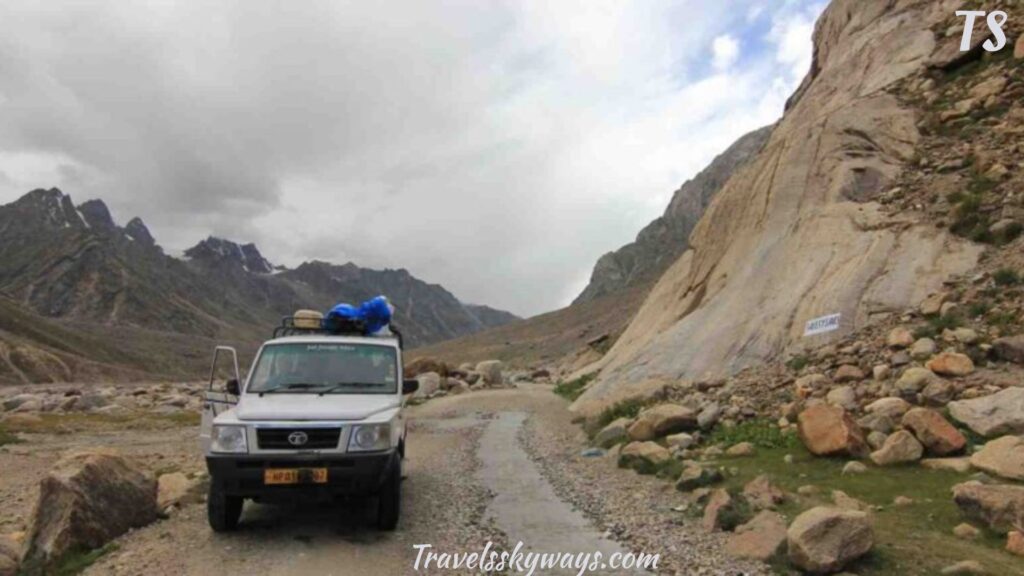
Reaching Chandratal Lake by Road
Getting to Chandratal Lake feels like a mini-expedition, yet the thrill of the journey keeps travelers coming back year after year. Most people approach it from Manali, since the route opens once the snow melts—usually from June to late September.
The road from Manali to Batal winds across the iconic Rohtang Pass and then through the raw, dramatic terrain of Chota Dhara and Chatru. From Batal, a rough but drivable track stretches around 14 km toward the designated parking area. The final leg requires a 1.5–2 km walk to reach the lakeshore.
Drivers often describe this road as one of the most adventurous in the Himalayas—narrow, rocky, and hugging cliffs. Still, it rewards you with stunning glacier views and an unforgettable sense of wilderness.
Public Transportation Options
Public transport remains limited due to altitude, weather, and road conditions, but travelers do have workable options:
- Seasonal HRTC buses run from Manali to Kaza, usually stopping at Batal. From Batal, travelers often hitch rides with passing jeeps or pre-book a pickup with local drivers.
- Shared taxis from Manali operate during peak season and drop passengers at the Batal junction.
- Local jeeps are available at Batal during tourist months. These rugged vehicles handle the terrain far better than standard taxis.
- Pre-booked tempo travelers or 4×4 jeeps are popular among groups, especially those continuing onward to Spiti.
A simple rule applies here: the earlier you secure transport, the smoother your trip becomes.
Common Routes Taken by Travelers
Most travelers choose between two major approaches:
Manali → Rohtang Pass → Gramphu → Chatru → Batal → Chandratal
This is the most popular route, known for its dramatic waterfalls, glacial streams, and moonscape-like terrain. Key details:
- Total distance: 110–115 km
- Travel time: 6–8 hours
- Best for: First-time visitors, families with drivers experienced in Himalayan terrain, and road-trip lovers.
Kaza → Losar → Kunzum Pass → Chandratal Diversion → Lake
This route appeals to those already exploring the Spiti Valley. It offers jaw-dropping vistas of Kunzum Pass at around 4,551 meters, where travelers often pause to circle the small temple for good luck.
- Total distance: 90–95 km
- Travel time: 4–5 hours
- Best for: Spiti circuit travelers, photographers, and adventure seekers.
Quick Route Comparison Table
| Route | Distance | Avg. Travel Time | Difficulty Level | Best For |
| Manali → Batal → Chandratal | ~110 km | 6–8 hours | High | First-timers, road-trip groups |
| Kaza → Kunzum → Chandratal | ~95 km | 4–5 hours | Moderate–High | Spiti circuit visitors |
Many travelers describe these journeys with the same phrase: “Half the adventure lies in getting there.”
And once the lake comes into view, its turquoise glow makes every twist in the road feel worth the effort.
Best Time to Visit Chandratal Lake
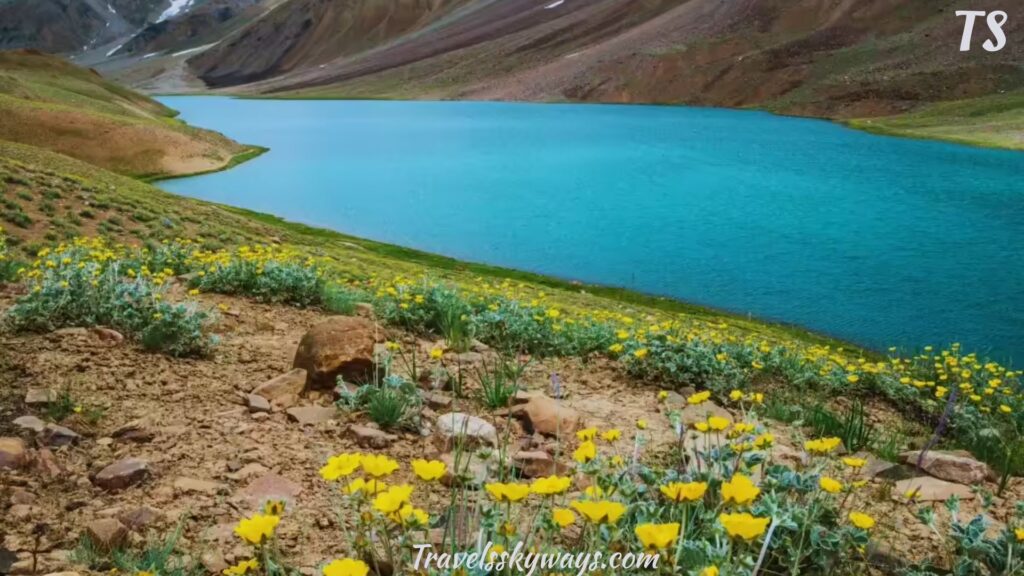
Ideal Travel Months
The very best time to visit Chandratal Lake stretches from mid-June to late September, when the road finally opens after months of heavy snowfall.
During this short window, the landscape bursts into life—lush alpine meadows bloom, streams run crystal clear, and the lake shifts between shades of emerald, turquoise, and deep sapphire.
Here’s a quick month-by-month breakdown:
| Month | Conditions | Why Visit |
| June | Roads are just open; snow is still visible along the route. | Crisp air, fewer crowds, vibrant contrasts of snow and blue water. |
| July | Mild days, chilly nights; stable roads. | Meadows bloom, perfect for photography. |
| August | Pleasant weather, strong winds in the afternoons. | Lake shows its brightest colors. |
| September | Cold nights, clear skies. | Best visibility, stunning starry nights. |
Many travelers love late September because the sky turns unbelievably clear.
As one seasoned trekker put it, “The stars above Chandratal feel close enough to scoop with your hands.”
Off-Season Conditions
Once October arrives, the panorama transforms into a frozen, inaccessible world. Snow begins covering the Batal–Chandratal road, temperatures fall sharply, and by late October, the area receives heavy snowfall. From October to early June, Chandratal enters deep winter conditions.
Here’s what off-season typically looks like:
- Roads close completely, often buried under several feet of snow.
- Temperatures can drop to –15°C to –25°C in peak winter.
- No accommodation, camps, or transport operate due to extreme weather.
- The lake freezes solid, losing its signature blue glow.
- High winds and avalanches make the region unsafe for any kind of travel.
Locals often say the mountains “sleep” during winter, and visitors must wait until summer breathes life back into the valley.
Weather at Chandratal Lake
Typical Weather Conditions
The weather at Chandratal Lake plays by its own rules. Even in peak season, the climate shifts quickly because the lake sits at 4,300 meters (14,100 feet). Days usually feel cool and crisp, while nights turn icy even in mid-summer.
Here’s a simple breakdown of what travelers normally experience between June and September:
| Month | Day Temperature | Night Temperature | General Conditions |
| June | 8°C to 15°C | –1°C to 5°C | Melting snow, chilly winds |
| July | 10°C to 18°C | 0°C to 6°C | Mild days, occasional cloud cover |
| August | 10°C to 17°C | 0°C to 5°C | Windy afternoons, bright mornings |
| September | 5°C to 14°C | –3°C to 2°C | Crystal-clear skies, cold nights |
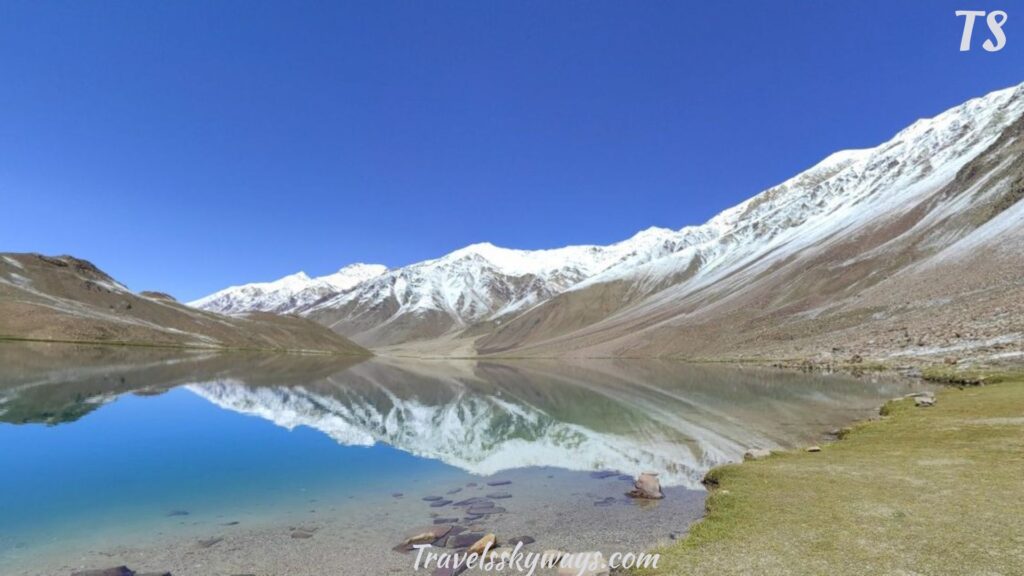
On calm days, the lake mirrors snow-capped mountains with stunning clarity. But once the wind picks up, ripples race across the water and temperatures drop fast.
Many visitors describe the daytime weather as “generous but unpredictable,” offering warmth one minute and a chill the next.
Sudden Weather Changes and Road Closures
At this altitude, weather changes faster than most travelers expect. A clear sky can turn stormy within minutes, and drizzle can transform into sharp, icy winds. These quick shifts affect not just comfort—they dictate road safety.
What usually causes disruptions:
- Flash snowfalls near Kunzum Pass sometimes even in early July.
- Rapid cloud build-up leading to reduced visibility.
- Stream overflows caused by afternoon snowmelt around Chatru and Chota Dhara.
- Landslides and road cuts after sudden rain or melting ice.
- Early road closures in late September, especially on the Batal stretch.
Local drivers often say, “The mountain doesn’t warn you twice.”
That’s why flexibility matters—you adjust your plans based on the weather, not the other way around.
How to Prepare for an Unpredictable Climate
A visit to Chandratal Lake becomes far easier when you prepare for swings in temperature and sudden weather drama. Here are essential tips that seasoned travelers swear by:
Must-Carry Gear
- Layered clothing: thermal base, fleece mid-layer, windproof outer jacket
- Quick-dry pants and insulated gloves
- Woolen cap and neck warmer
- Waterproof hiking shoes
- Rain and wind protection (lightweight poncho or jacket)
Travel Planning Tips
- Start early—afternoons bring stronger winds and more stream crossings.
- Keep buffer days in your itinerary in case roads shut briefly.
- Always check the weather for Rohtang Pass, Kunzum Pass, and Batal, since these sections dictate road access.
- Avoid driving after dark; temperatures dip sharply, and roads become risky.
Health & Comfort Prep
- Carry sunscreen, even on cold days—UV rays hit hard at this altitude.
- Drink plenty of water to reduce the chances of altitude sickness.
- Keep snacks handy; weather delays sometimes stretch for hours.
When you respect the mountain’s unpredictability, the journey becomes smoother—and more magical.
As many travelers like to say, “Chandratal rewards the prepared.”
Exploring the Beauty of Chandratal Lake
Scenic Beauty and Landscape
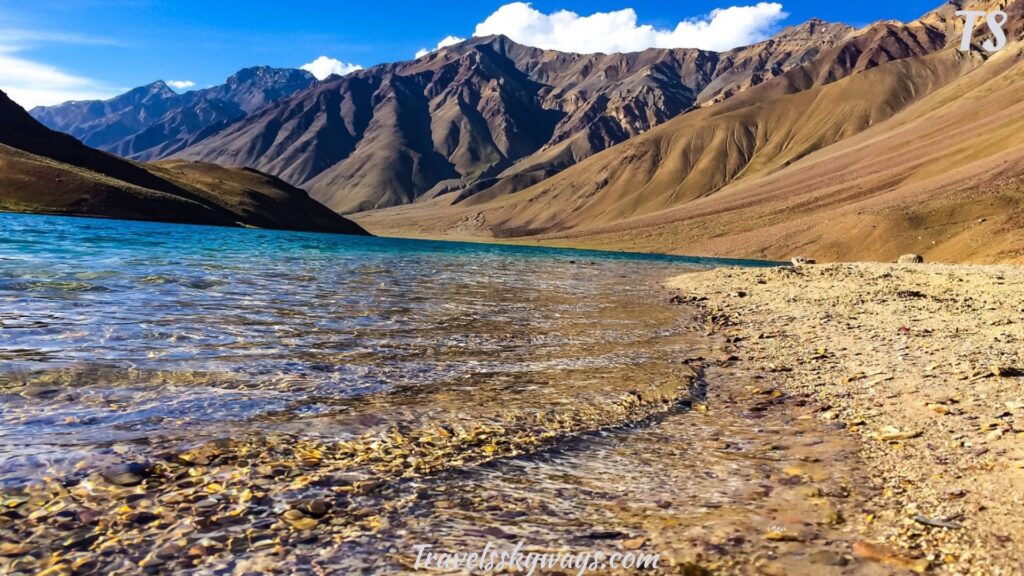
The moment you step onto the plateau overlooking Chandratal Lake, the world shifts. The lake curves like a silver-blue crescent, framed by towering peaks of the Chandra Bhaga range. Sunlight dances across the surface, changing the water from emerald to turquoise to inky sapphire as the day unfolds.
Soft winds move through the valley, carrying the quiet hum of distant streams and the earthy scent of alpine soil. Early mornings feel almost unreal—mist floats over the water, and the first rays of sun paint the slopes in shades of gold. By afternoon, brisk winds sweep across the lake, stirring ripples that sparkle like crushed glass.
Travelers often describe Chandratal as a place where “silence becomes its own kind of music,” and after a few minutes on its banks, you’ll understand why.
Key Viewpoints and Photo Spots
Chandratal Lake offers some of the most photogenic landscapes in the Himalayas. Whether you’re a casual visitor or a dedicated photographer, the viewpoints below guarantee breathtaking shots.
Top Spots to Capture the Magic
- The Upper Ridge Viewpoint
Hike a few minutes above the main trail to get a panoramic view of the entire crescent-shaped lake. This angle highlights the sharp contrast between turquoise water and rugged, brown mountains. - The Eastern Meadow Stretch
During July and August, this area blooms with tiny wildflowers. The combination of green meadows, blue water, and distant glaciers makes every frame postcard-worthy. - The Western Shoreline
Best during sunset. Warm light hits the peaks behind the lake, creating a golden glow reflected on the water’s surface. - The Kunzum Pass Approach Point
While descending from Kunzum towards Chandratal, there’s a natural vantage point that offers a dramatic first glimpse of the lake—perfect for wide-angle shots.
Photographer’s Quick Tips
For astrophotography, September nights offer crystal-clear skies.
Arrive before 9:00 AM for glass-like water reflections.
Use the mountain shadows to create depth in landscape shots.
Must Read: The 10 Safest Countries in Africa (2025)
Flora and Fauna Around the Lake

Even though Chandratal Lake sits in a cold desert ecosystem, life thrives in surprising ways. Wander slowly along its edges, and you’ll notice delicate pockets of biodiversity shaped by altitude and season.
Flora
- Alpine wildflowers such as blue poppies, Himalayan buttercups, and tiny mountain asters bloom briefly between July and August.
- Hardy grasses dominate the meadows, forming soft green carpets that contrast beautifully with the barren slopes.
- Lichens and mosses cling to rocks—signs of resilience in a challenging climate.
Fauna
- Look closely, and you may spot Himalayan marmots sunning themselves on boulders.
- Rare sightings of snow leopards occur in nearby ranges, though they remain elusive.
- Red foxes, ibex, and blue sheep (bharal) roam the surrounding valleys.
- Migratory birds—like ruddy shelducks—often visit the lake in summer, bringing life and color to the high-altitude silence.
Many visitors say that observing wildlife here feels like watching nature breathe quietly, undisturbed, and ancient.
Activities at Chandratal Lake
Trekking Experience

For adventure lovers, Chandratal Lake isn’t just a destination—it’s an experience. The trek to the lake, though short from Batal (about 2 km), winds through rugged trails, rocky streams, and high-altitude meadows.
For more serious trekkers, multi-day treks connect Chandratal with Bara-lacha La, Spiti Valley, and nearby high passes, offering panoramic views of glaciers, peaks, and valleys.
Highlights of trekking here:
- Short Trail to Lakeshore: Perfect for beginners, with easy to moderate difficulty.
- Extended High-Altitude Routes: For seasoned trekkers; includes camping at meadows and glacier viewpoints.
- Photography Opportunities: Every turn offers dramatic mountain backdrops, pristine alpine flora, and reflections in the lake.
A trekker once noted, “Each step toward Chandratal feels like climbing into a painting—untouched and alive.”
Exploring the Lake Perimeter
Walking around the crescent-shaped Chandratal Lake is a serene experience. The full loop is roughly 2–3 km, and it provides different perspectives at every bend.
On one side, you see the mirror-like water reflecting snow-capped peaks. On the other hand, rugged cliffs frame the landscape, and small streams trickle down into the lake.
Tips for exploring:
- Start early to capture the lake in morning light.
- Follow marked trails to avoid fragile alpine flora.
- Bring water and snacks; the high altitude makes every step slightly more strenuous.
- Keep a binoculars handy for spotting wildlife like marmots, ibex, or migratory birds.
Night Camping and Stargazing

One of the most magical experiences at Chandratal Lake is camping under the stars. Away from light pollution, the night sky at 4,300 meters turns into a cosmic theater. The Milky Way stretches across the heavens, and constellations shine with breathtaking clarity.
Key tips for night camping:
- Book campsites in advance during June–September; tents range from simple dorm-style to semi-luxury options.
- Carry warm sleeping bags; nights can drop to –5°C to –10°C even in summer.
- Use headlamps sparingly to enjoy complete darkness for stargazing.
- Sip hot beverages and soak in reflections of moonlight on the water—it’s an otherworldly experience.
A seasoned traveler shared: “Lying in the tent, looking up at the stars mirrored in the lake, I felt both infinitesimal and infinite at once.”
Whether trekking, exploring, or camping, Chandratal Lake offers a rare blend of adventure, serenity, and visual splendor—making it a must-visit for every high-altitude enthusiast.
Camping Near Chandratal Lake
Official Camping Areas
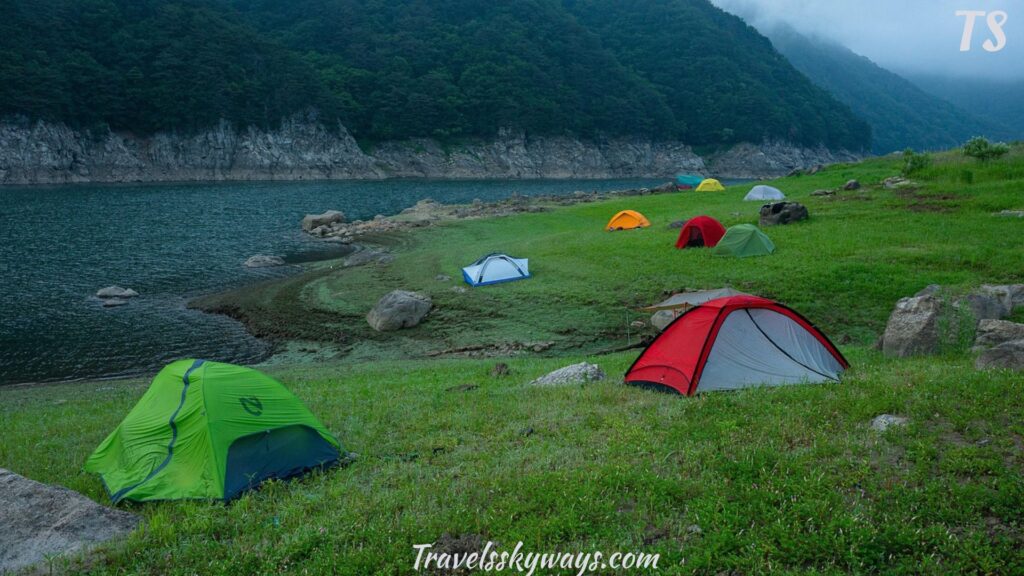
- Lakeshore camping is banned to protect the fragile ecosystem. Visitors can only camp at designated sites located about 2–3 kilometers from the lake near the roadhead or parking area.
- Camps are run by local operators and typically offer tents, bedding, and basic meals.
- The camping season runs from mid-June to September. Outside this period, only day trips are possible.
Rules and Regulations for Camping
To preserve the natural beauty and safety of the area, follow these rules:
- No camping at or near the lake shore.
- No littering. Carry back all trash, including plastics and leftover food.
- No washing, swimming, or bathing in the lake.
- Use only licensed or designated campsites. Self-camping near the lake is prohibited.
- Expect basic facilities; tents and toilets are simple, not luxurious.
Safety Tips for Night Stay
Camping at high altitude requires preparation. Here are essential tips:
| Tip | Why It Matters |
| Acclimatize first – stay a night at mid-altitude before reaching Chandratal | Prevents altitude sickness. |
| Warm clothing & sleeping bag rated for –5°C or lower | Nights are cold even in summer. |
| Power bank & extra batteries | Campsites often lack electricity. |
| Carry water and food | Limited availability nearby. |
| Avoid loud noises and bright lights | Protects wildlife and preserves the natural experience. |
| Check weather & road conditions | Mountain weather changes quickly; roads may close suddenly. |
| Respect the environment | Take all trash back; avoid plastics. |
Extra tip: The Mobile network is almost non-existent near the campsite, so plan for offline maps and communication.
Recent Changes (2025)
- Designated campsites are fully operational between mid-June and September.
- Strict rules remain in place to reduce environmental damage.
- Following guidelines ensures a safe, enjoyable, and eco-friendly camping experience.
Health & Safety at Chandratal Lake
Acclimatization and Altitude Sickness
Visiting Chandratal Lake means entering the high-altitude realm of 4,300 meters (14,100 feet). At this height, your body needs time to adjust, or you risk acute mountain sickness (AMS).
Symptoms include headaches, nausea, dizziness, fatigue, and shortness of breath. In severe cases, fluid can build up in the lungs or brain, which is life-threatening.
Acclimatization Tips
- Spend a night at mid-altitude (Losar or Kaza, 3,600–3,800 m) before heading to Chandratal.
- Ascend gradually—avoid rushing directly from Manali (2,050 m) to the lake in one day.
- Stay hydrated—drink plenty of water and avoid alcohol.
- Eat light, carbohydrate-rich meals—this helps energy levels and oxygen efficiency.
- Monitor symptoms—if you develop severe headache, nausea, or breathlessness, descend immediately.
One trekker shared: “I thought I could push through, but after a few hours at Batal, I realized my body needed a day to catch up with the altitude. The next morning, Chandratal felt magical, not punishing.”
Essential Safety Measures for High-Altitude Travel
High-altitude environments like Chandratal are unpredictable. Preparation and caution can make the difference between an enjoyable adventure and a dangerous trip.
Key Safety Measures
- Layer your clothing – daytime temperatures are mild, but nights are freezing. Include thermal wear, windproof jackets, and insulated gloves.
- Protect yourself from UV rays – even on cloudy days, sunlight is strong; sunglasses and sunscreen are essential.
- Carry a first-aid kit – include medications for headaches, nausea, and altitude sickness.
- Keep your travel companions informed – always stick to designated trails and inform others of your route.
- Check weather forecasts – sudden storms can cause landslides or block roads.
- Avoid strenuous activity on the first day – gentle walks are better than long treks immediately after arrival.
- Use trekking poles or walking sticks – they help with balance on uneven terrain.
Emergency Preparedness
- Know the nearest medical facilities—Kaza has basic healthcare, but severe cases may require evacuation.
- Keep an emergency contact plan with guides, camp operators, and local authorities.
- Carry oxygen if you’re prone to AMS or traveling with elderly companions.
Following these guidelines ensures your trip is safe, enjoyable, and memorable.
Travelers who respect the altitude and the mountains often describe the experience as “transformative, serene, and breathtakingly beautiful.”
Packing Guide for Chandratal Lake
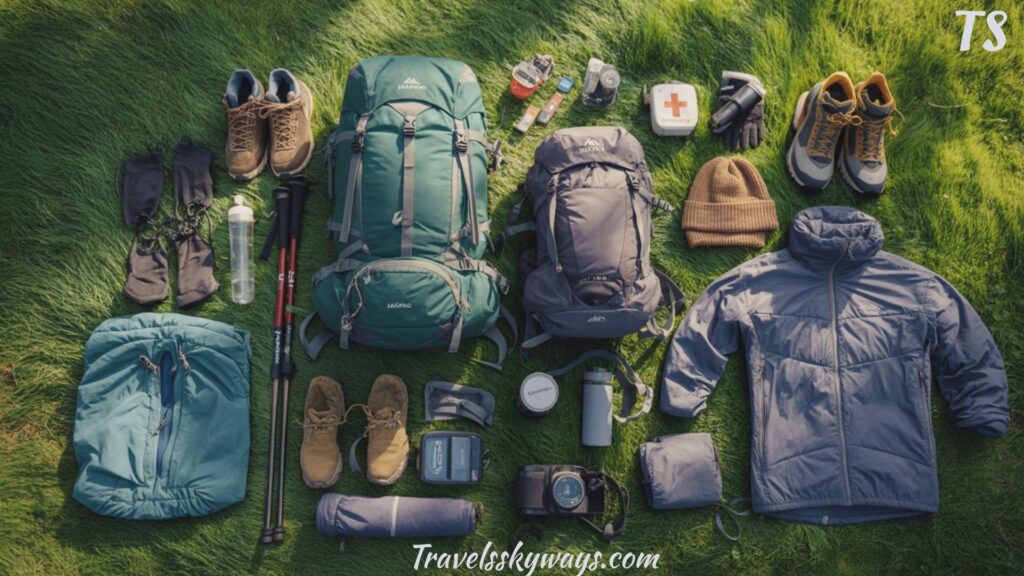
Visiting Chandratal Lake requires careful planning—high-altitude weather is unpredictable, and services are limited. Packing right ensures comfort, safety, and an unforgettable experience.
Clothing and Gear Essentials
Layering is key at 4,300 meters. Temperatures swing dramatically from day to night, so choose versatile, high-quality clothing.
Must-Have Clothing:
- Thermal base layers – for warmth during chilly nights
- Fleece or insulated mid-layer – retains heat without bulk
- Windproof and waterproof jacket – essential against sudden gusts and rain
- Quick-dry trekking pants – lightweight and breathable
- Woolen gloves, cap, and scarf/neck gaiter – protect extremities from frost
- Sturdy waterproof trekking shoes – with good ankle support
- Sunglasses with UV protection – high-altitude sun is intense
Additional Gear:
- Headlamp or flashlight with spare batteries
- Sunscreen and lip balm (SPF 50+)
- Personal medications and a basic first aid kit
- Sunglasses and trekking poles for stability
Camping & Trekking Equipment
Even if staying at a campsite, carrying some personal gear makes life easier:
- Sleeping bag rated –5°C or lower
- Insulated mat for extra warmth
- Tent (if self-camping at designated sites)
- Portable stove and utensils (if cooking your own meals)
- Reusable water bottles or hydration pack – water sources are limited
- Dry bags – keep clothes and electronics safe from moisture
Tips: Lightweight, compact gear is crucial. Avoid bulky backpacks; a 30–40L pack is usually sufficient for a 2–3 day trip.
Food Essentials and Packing Your Own Meals
Camps offer basic meals, but bringing your own food ensures flexibility and a better energy supply.
Recommended Food Items:
- Instant noodles, pasta, or soups – quick and easy
- Energy bars, nuts, and dry fruits – high-calorie snacks for trekking
- Bread, cheese, and peanut butter – simple, filling meals
- Tea, coffee, and electrolyte powders – stay hydrated and warm
- Ready-to-eat meals or vacuum-packed food – lightweight, no refrigeration needed
Tips for High Altitude:
- Eat small, frequent meals to maintain energy
- Avoid alcohol – it worsens dehydration and altitude sickness
- Pack snacks in zip-lock bags to prevent spillage and contamination
Quick Packing Checklist
| Category | Items |
| Clothing | Thermal layers, fleece, windproof jacket, trekking pants, gloves, cap |
| Gear | Headlamp, trekking poles, sunglasses, sunscreen, and first aid |
| Camping | Sleeping bag, mat, tent (if allowed), dry bags |
| Food | Energy bars, nuts, instant meals, beverages, and ready-to-eat packs |
| Extras | Power bank, camera, water bottles, toiletries |
Proper packing lets you enjoy Chandratal Lake fully—from sunrise reflections to starry night skies—without worrying about discomfort or emergencies.
Must Read: “Visit Japan Web” Information from Digital Agency, Government of Japan
Essential Travel Tips for Chandratal Lake
Visiting Chandratal Lake is an unforgettable experience, but the region’s fragile ecosystem and unique culture require careful attention. Following these tips ensures a safe, enjoyable, and responsible journey.
How to Travel Responsibly
High-altitude landscapes like Chandratal are delicate. Every action, from trekking to camping, affects the environment. Responsible travel helps preserve this natural wonder for future visitors.
Key Practices
- Stick to designated trails – wandering off can damage alpine flora and fragile soil.
- Carry all trash back – avoid leaving any plastics, food wrappers, or bottles behind.
- Avoid disturbing wildlife – observe animals quietly, don’t feed them, and maintain distance.
- Use eco-friendly products – biodegradable soaps, toothpaste, and detergent reduce water pollution.
- Respect local rules – lakeshore camping is banned, swimming and washing in the lake is prohibited.
As a traveler once said, “Mountains demand respect. The moment you leave only footprints, the journey becomes more magical.”
Local Etiquette and Cultural Care
Chandratal lies in Spiti Valley, home to a unique Buddhist culture and tight-knit communities. Showing respect enhances your travel experience and builds goodwill.
Tips for Interacting Locally
- Greet with a smile – simple gestures like Namaste go a long way.
- Ask before photographing people – some locals prefer privacy, especially during religious rituals.
- Dress modestly – cover shoulders and knees when visiting villages or monasteries.
- Support local businesses – purchase handicrafts, snacks, or hire guides from the village.
- Avoid loud music or disruptive behavior – the region values quiet and reflection.
Environmental Awareness
- Avoid single-use plastics; use reusable bottles and containers.
- Carry portable ashtrays if you smoke, as littering is frowned upon.
- Respect sacred sites – don’t touch prayer flags or stupas unless invited.
By traveling responsibly and respecting local culture, you leave a positive impact while fully enjoying the beauty of Chandratal Lake.
Permits and Documentation for Chandratal Lake
Traveling to Chandratal Lake requires careful preparation because it lies in a sensitive high-altitude region of Spiti Valley. Authorities regulate access to protect the environment and local communities, so obtaining the correct permits is essential for a smooth visit.
Required Permissions
To enter the Chandratal area, travelers typically need the following:
Inner Line Permit (ILP)
- Mandatory for all foreign nationals visiting the Spiti Valley.
- Indian citizens from outside Himachal Pradesh do not need ILP but may require certain local permits for camping or trekking.
Vehicle Permit
- Required if driving your own car or bike to Chandratal.
- Ensures vehicles are allowed on high-altitude roads, especially near Kunzum Pass and other restricted zones.
Camping Permit
- Only mandatory if self-camping at designated sites (not lakeshore).
- Camps run by licensed operators handle permits for you automatically.
Protected Area Guidelines
- Visitors must adhere to environmental rules, including no littering, no washing in the lake, and no off-trail trekking in restricted zones.
Where and How to Obtain Permits
Foreign Nationals
- Apply for the Inner Line Permit at:
- Kaza Office (Spiti Valley Administration)
- Key entry points like Manali or via online portals were available for 2025–2026 travelers.
- Kaza Office (Spiti Valley Administration)
- Carry a passport, visa, and recent photographs.
Indian Citizens
- Vehicle permits and local camping permissions are usually issued at:
- Manali Motor Vehicle Office for vehicles
- Kaza or Losar offices for trekking/camping permissions
- Manali Motor Vehicle Office for vehicles
- Keep ID proof and vehicle documents handy.
Tips for Permit Process
- Apply 1–2 days in advance to avoid last-minute delays.
- Keep multiple copies of permits with you; checkpoints at Kunzum Pass or Batal may request verification.
- For organized tours, tour operators handle permits, simplifying the process significantly.
- Always confirm seasonal road access before applying, as Kunzum Pass can remain closed due to snow in early June or late September.
Nearby Attractions Around Chandratal Lake
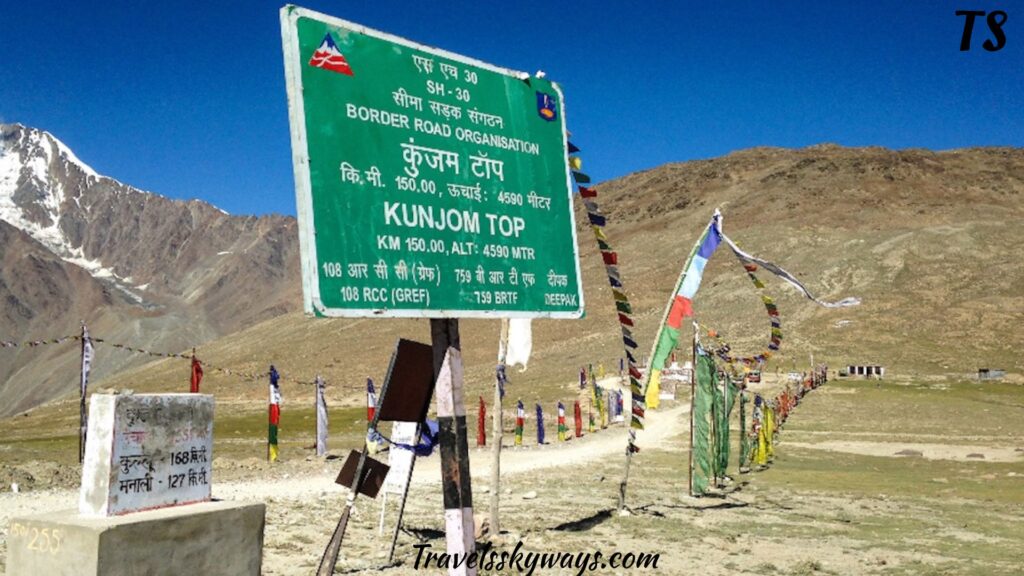
While Chandratal Lake is the main highlight, the surrounding Spiti Valley offers several attractions that make the journey even more memorable. From high mountain passes to ancient monasteries, this region is rich in natural beauty and cultural heritage.
Kunzum Pass
- Located around 30 km from Chandratal, Kunzum Pass sits at 4,551 meters (14,931 ft) and serves as the gateway between the Lahaul and Spiti valleys.
- The pass offers breathtaking panoramic views of snow-capped peaks, glaciers, and deep valleys.
- Visitors often stop here for:
- Photography – dramatic mountain landscapes and prayer flags fluttering in the wind
- Short treks – trails near the pass lead to small glacial lakes and meadows
- Cultural experience – locals maintain small shrines and perform rituals at the pass
- Photography – dramatic mountain landscapes and prayer flags fluttering in the wind
Note: Roads can be closed during heavy snowfall or early June, so always check conditions before visiting.
Key Monasteries in Spiti Valley
Spiti is often called the “Little Tibet of India” due to its rich Buddhist heritage. A few must-visit monasteries include:
| Monastery | Distance from Chandratal | Highlights |
| Kye Monastery | ~65 km | One of the largest in Spiti, with ancient murals and a large assembly hall |
| Dhankar Monastery | ~70 km | Perched on a cliff overlooking the confluence of the Spiti and Pin Rivers, perfect for photography |
| Tabo Monastery | ~150 km | UNESCO World Heritage site; houses some of the oldest Buddhist frescoes in India |
| Key Monastery | ~130 km | Iconic hilltop monastery offering spectacular valley views |
Visiting these monasteries provides insight into local spirituality, art, and centuries-old traditions.
Other Noteworthy Places
- Batal Village – Gateway village for Chandratal Lake; ideal for acclimatization, supplies, and short hikes.
- Pin Valley National Park – Rich in wildlife like snow leopards, ibex, and Himalayan marmots. A few hours’ drive from Chandratal.
- Losar Village – Traditional Spitian village with stone houses and high-altitude meadows. A peaceful stopover for photography and local interaction.
- Chandratal Trekking Routes – Short loops around the lake or longer treks connecting to Bara-lacha La and other high passes.
Exploring these attractions adds depth to your Chandratal trip, combining nature, adventure, and culture into a single journey.
Regional food and cuisine around Chandratal Lake

Exploring Chandratal Lake isn’t just about breathtaking views—it’s also a chance to savor Spiti Valley’s unique cuisine. High-altitude ingredients, traditional recipes, and hearty meals keep travelers energized in this rugged environment.
Popular Regional Dishes
The local diet is shaped by the harsh climate and high altitude. Staples are often rich in carbs and protein, perfect for sustaining energy during trekking or camping.
- Thukpa – A Tibetan-style noodle soup with vegetables, eggs, or meat; warms you instantly in cold weather.
- Tingmo – Steamed bread, often served with curries or lentils; soft and fluffy.
- Chha Gosht – Spitian lamb curry cooked with minimal spices to highlight natural flavors.
- Babru – Local bread stuffed with lentils or spices, great as a snack on the trail.
- Skyu – Traditional Spitian pasta with vegetables and chunks of meat; hearty and filling.
- Butter Tea (Gur Gur Chai) – Salty, buttery tea unique to the region; perfect for high-altitude mornings.
Tip: Many dishes are vegetarian-friendly, but ask in advance if traveling with dietary restrictions.
Food Options Around Chandratal
Being remote, food options near Chandratal are limited, but a few choices exist:
- Campsites near Chandratal – Most provide simple meals like dal, rice, noodles, and soups; some offer continental options for trekkers.
- Batal Village – A few small eateries serve local dishes, tea, and snacks; ideal for breakfast or lunch before the trek.
- Self-Catering – Many travelers carry ready-to-eat meals, energy bars, and instant noodles. This ensures flexibility and avoids dependence on limited food services.
Tips for Eating in High-Altitude Areas
- Eat small, frequent meals to maintain energy.
- Avoid heavy or oily foods that are hard to digest at high altitudes.
- Drink plenty of water; dehydration can worsen altitude sickness.
- Carry snacks like nuts, dry fruits, or chocolate for trekking breaks.
Enjoying local cuisine adds a cultural and flavorful dimension to your Chandratal journey, making every meal as memorable as the stunning landscapes around the lake.
Photography and Social Media Spots at Chandratal Lake
Chandratal Lake isn’t just a destination—it’s a photographer’s paradise. From shimmering waters to snow-capped peaks, every angle offers a perfect shot. Whether you’re a casual traveler or a social media enthusiast, planning your photography can make your visit truly unforgettable.
Best Sunrise and Sunset Spots
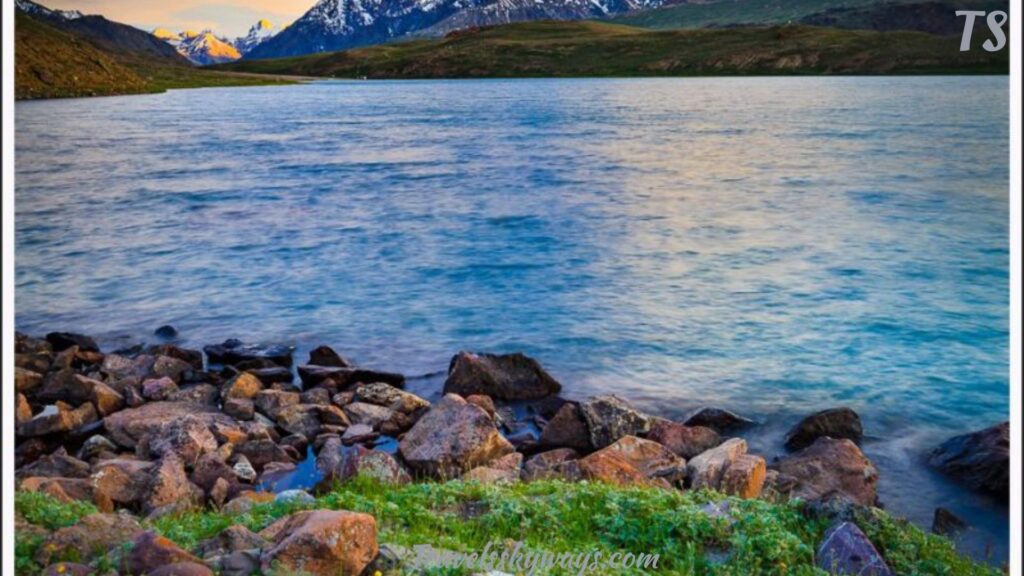
The lake’s crescent shape creates magical reflections during golden hours.
- Sunrise at the Northern Shore – The eastern peaks catch the first light, turning the lake into a mirror of fire and gold. Ideal for time-lapse or slow-motion shots of mist rising from the water.
- Sunset from the Western Ridge – Walk along the slight elevation to capture silhouetted peaks against a glowing sky, perfect for wide-angle landscapes.
- Batal Approach Road – On your way to the lake, early morning captures of the lake from a distance highlight the surrounding meadows and Himalayan terrain.
Tip: Arrive 30–45 minutes before sunrise or sunset to set up your gear and scout the best angles.
Iconic Angles and Lake Views
Chandratal offers several classic frames that are social media gold:
- Reflection Shots – Calm waters reflect snow-capped mountains and clouds; try a low-angle shot near the shore for dramatic symmetry.
- Aerial Perspective – Drone photography (where permitted) captures the crescent shape of the lake with surrounding rugged terrain.
- Tented Campsites – Frame your tent against the lake or mountains; it adds a personal travel-story element.
- Flora and Wildlife Foreground – Include wildflowers, marmots, or ibex in the foreground to add depth and life to your shots.
Tips for Viral Travel Photography
- Golden and Blue Hours Are Key – Harsh midday light can wash out colors; early morning and late evening provide richer hues.
- Use Leading Lines – Trails, shorelines, or streams guide the viewer’s eye naturally into the landscape.
- Include a Human Element – A hiker, tent, or traveler adds scale and relatability.
- Shoot in RAW Format – Allows better post-processing for contrast, exposure, and colors.
- Experiment with Angles – Don’t just shoot straight-on; crouch low, climb rocks, or use drone shots for dramatic perspectives.
- Capture Night Skies – Chandratal’s altitude and lack of light pollution make it perfect for Milky Way shots. Long exposure with a tripod works best.
- Use Social Media Strategically – Include geotags, relevant hashtags (#ChandratalLake, #SpitiValley, #HighAltitudeTravel), and caption stories about your trek or camping experience.
By planning your photography around light, perspective, and storytelling, your Chandratal Lake shots will not only look spectacular but also engage audiences across social media.
FAQs
Is there mobile network coverage at Chandratal Lake?
Mobile connectivity is extremely limited; only BSNL or local SIMs may work intermittently near campsites.
Are vehicles allowed all the way to the lake?
Only high-clearance SUVs or bikes can approach designated parking near the lake; regular cars may face difficulties on rough terrain.
Can children or the elderly visit Chandratal safely?
Yes, with proper acclimatization and limited physical exertion, but altitude sickness remains high.
Are there toilets or drinking water facilities at the lake?
Basic pit toilets exist at campsites; travelers should carry their own water filtration or purification tablets.
Can one fish or swim in Chandratal Lake?
No, swimming and fishing are prohibited to preserve the fragile ecosystem.
Conclusion
Chandratal Lake in Spiti Valley is a high-altitude gem offering breathtaking landscapes, serene waters, and unforgettable adventures. From trekking and camping to capturing stunning photography spots, the lake provides experiences for nature lovers and thrill-seekers alike.
By planning carefully, following safety measures, respecting local culture, and traveling responsibly, visitors can fully enjoy this pristine destination. Whether it’s witnessing sunrise over the crescent-shaped lake, exploring nearby monasteries, or stargazing under clear skies, Chandratal Lake promises a magical and memorable journey in 2025 and beyond.

Travels skyways helps you plan your perfect journey with expert tips, destination guides, travel hacks, and budget advice. Whether it’s a quick getaway or a dream vacation, we’re here to guide your adventure from start to finish.